
Why Do Wounds Heal Slowly in Diabetes?
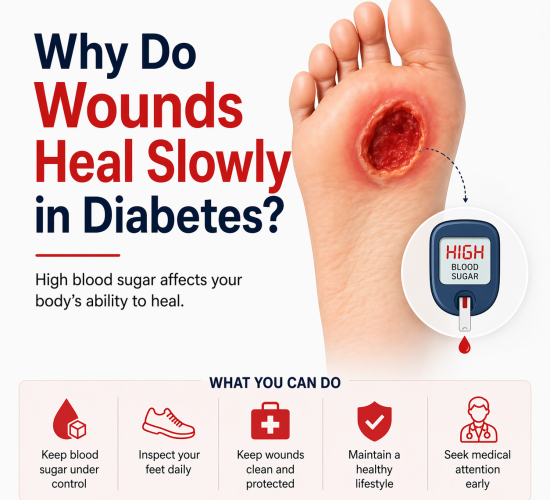
Diabetes is more than just high blood sugar. It quietly harms your body every single day. One of its most serious effects is slow wound healing. A small cut, a blister, or a scrape can take weeks or even months to close. For many people, this leads to deep infections. Some even face the risk of losing a limb. This is not a rare problem. Millions of diabetic patients deal with this every year. If you or someone you know has diabetes, understanding this problem is very important. Speaking with the best diabetologist in Mumbai can help you act before a small wound becomes a big threat.
How Does Normal Wound Healing Work?
Before understanding the problem, it helps to know how wounds normally heal. The body follows a clear process after skin gets damaged.
First, the bleeding stops. Blood clots form quickly. Then, white blood cells arrive and fight any germs. The body then grows new tissue to fill the gap. Finally, fresh skin forms and covers the area completely.
This process depends on three things. Good blood flow. Healthy nerves. And a strong immune system. All three work together to repair skin. In a healthy person, this takes a few days to two weeks.
In a person with diabetes, all three of these systems are affected. That is why healing takes far longer and often leads to complications.
Why Does Diabetes Slow Down Wound Healing?
There are several clear reasons why diabetic wound care is so important. Each reason connects to how diabetes affects your body.
1. High Blood Sugar Damages Blood Vessels
When blood sugar stays high over time, it damages the walls of blood vessels. These vessels carry blood, oxygen, and nutrients to all body parts. When they are damaged, blood flow slows down.
A wound needs a steady blood supply to heal. Without it, new tissue cannot grow fast enough. The wound stays open longer. Germs find it easier to enter and cause infection.
This is one of the main reasons wounds do not close well in diabetes. Controlling blood sugar is the first step in proper diabetic wound care.
2. Nerve Damage (Diabetic Neuropathy)
Diabetes often causes diabetic neuropathy. This is nerve damage that usually starts in the feet and legs. When nerves are damaged, you lose the ability to feel pain, heat, or pressure.
This is very dangerous. You may step on something sharp and not feel it. You may wear tight shoes and not notice a blister. A wound may form and grow worse without you knowing.
By the time you see it, the wound may already be infected. Many patients visiting the top diabetologist in Mumbai are surprised to find wounds they never felt. Regular foot checks are a must for all diabetic patients.
3. Weak Immune System
Diabetes weakens the immune system. Your body's ability to fight infections goes down. White blood cells do not work as well as they should. They cannot kill bacteria quickly or effectively.
When a wound gets infected, the body struggles to clear it. The infection spreads. The wound deepens. Healing becomes even harder. In severe cases, the infection can reach the bone. This is called osteomyelitis, and it is very serious.
A strong immune response is key to healing. In diabetes, that response is slow and too weak to manage infections properly.
4. Reduced Collagen Production
Collagen is the protein that holds skin and tissue together. It builds new skin over a wound. High blood sugar blocks collagen production in the body.
Without enough collagen, new tissue does not form properly. The wound cannot close as it should. Even when a wound seems to be healing, the new skin is weaker than normal. That makes it easy for the wound to reopen.
5. Poor Blood Circulation in the Feet
Many people with diabetes and foot wounds also have a condition called peripheral artery disease. In this condition, the arteries in the legs and feet become narrow. Blood flow to the feet becomes very poor.
When blood cannot reach the wound, healing stops. The tissue may begin to die. This leads to diabetic foot ulcers. These ulcers are one of the most common reasons diabetic patients need hospital care.
What Are the Warning Signs of a Non-Healing Wound?
You should watch for these signs in any wound. The wound shows no improvement after two weeks. The area around it looks red or swollen. Warmth or pus is coming from the wound. A bad smell is coming from the area. The wound keeps getting bigger instead of smaller.
If you notice any of these signs, see a doctor right away. Do not wait and hope it will heal on its own. In diabetes, wounds can worsen very quickly.
How Can You Speed Up Wound Healing in Diabetes?
There are practical steps that help wounds heal faster. These steps also reduce the risk of serious complications.
Keep Blood Sugar Under Control
This is the single most important step. High blood sugar slows everything down. When your sugar levels stay stable, your body heals better. Work closely with your doctor to set the right sugar targets for your age and health condition.
Clean and Cover the Wound Every Day
Clean the wound gently with mild soap and water. Apply an antibiotic ointment if your doctor advises it. Cover the wound with a clean bandage. Change the dressing every day. This keeps germs out and the wound moist. A moist environment speeds up the growth of new skin.
Avoid Pressure on the Wound
If the wound is on your foot, reduce how much you stand or walk. Use proper diabetic footwear. Pressure slows blood flow to the wound. Reducing pressure allows healing to move forward more smoothly.
Eat Well and Stay Hydrated
Your body needs protein, vitamins, and minerals to repair skin. Eat foods rich in zinc, vitamin C, and protein. Drink plenty of water throughout the day. A well-nourished body always heals faster than one that lacks key nutrients.
See the Best Diabetologist in Mumbai
Regular visits to the
best diabetologist in Mumbai
make a real difference. A specialist checks for nerve damage, monitors blood sugar, and gives you a proper wound care plan. Early treatment prevents small wounds from becoming life-threatening problems.
When Should You Go to the Doctor?
Any wound that does not heal in two weeks needs medical attention. If you have diabetes, do not wait that long. See your doctor within a few days if the wound looks bad. Go to the emergency room immediately if you see signs of a deep or spreading infection.
Diabetic foot ulcers and non-healing wounds need expert care. A diabetologist or wound care specialist can treat the wound properly. They can also help prevent it from getting worse over time.
Conclusion
Slow wound healing in diabetes is serious, but it is manageable. High blood sugar, nerve damage, poor circulation, and a weak immune system all play a role. Understanding these causes helps you act early. Clean your wounds daily and control your blood sugar consistently. Never ignore a wound that is not improving. Consulting the top diabetologist in Mumbai gives you the best chance to avoid major complications. Timely care saves limbs and can save your life. Small steps today prevent bigger problems tomorrow. Your health is worth protecting every single day.