
Heart Attack vs Cardiac Arrest: What’s the Difference?
Every year, thousands of people lose their lives because of one simple mistake: confusing a heart attack with cardiac arrest. These are two very different medical events. But most people treat them as the same thing. This confusion costs lives. Time is everything in both emergencies. Knowing the difference can help you take the right action at the right moment. It can help you save a life, maybe even your own. If you or your loved ones are at risk for heart conditions, this article is a must-read. And if you are looking for the best diabetologist in Mumbai, understanding these heart conditions is especially important since diabetes and heart disease are closely linked.
What Is a Heart Attack?
A heart attack happens when blood flow to the heart gets blocked. The heart needs a constant supply of blood to work. When that supply is cut off, part of the heart muscle starts to die. This blockage is usually caused by a clot forming in a narrowed artery. The arteries become narrow due to fat buildup over time. This condition is called coronary artery disease (CAD). A heart attack is a circulation problem. The heart usually keeps beating during a heart attack. But the longer the blockage stays, the more damage happens to the heart.
Symptoms of a Heart Attack
Heart attack symptoms can show up slowly. Sometimes they appear hours or even days before the actual event. The most common symptom is chest pain or pressure. This pain may feel like squeezing or heaviness in the chest. The pain can spread to the arm, jaw, back, or neck. Some people feel shortness of breath. Others may feel nausea, cold sweat, or dizziness. Women sometimes have less obvious symptoms. They may feel unusual fatigue or mild discomfort. This makes heart attacks in women harder to detect. If you notice any of these signs, call for emergency help right away. Do not wait to see if it gets better.
What Is Cardiac Arrest?
Cardiac arrest is very different from a heart attack. During cardiac arrest, the heart suddenly stops beating altogether. This happens because of an electrical problem in the heart. The heart’s electrical system controls its rhythm. When this system fails, the heart goes into an abnormal rhythm called ventricular fibrillation. In this state, the heart quivers instead of pumping blood. Blood flow to the brain and body stops within seconds. The person loses consciousness almost immediately. Cardiac arrest is a medical emergency. Without treatment within minutes, it can be fatal.
Symptoms of Cardiac Arrest
Cardiac arrest gives little to no warning. The person suddenly collapses without any prior complaints. They become unresponsive almost instantly. They stop breathing normally. There is no pulse. Unlike a heart attack, there is no gradual build-up of pain. The event is sudden and shocking. Some people may feel palpitations or dizziness just before it happens. But most people have no warning at all. If you see someone collapse suddenly, check if they are breathing. If not, call emergency services right away and start CPR (cardiopulmonary resuscitation) immediately.
Heart Attack vs Cardiac Arrest: Key Differences
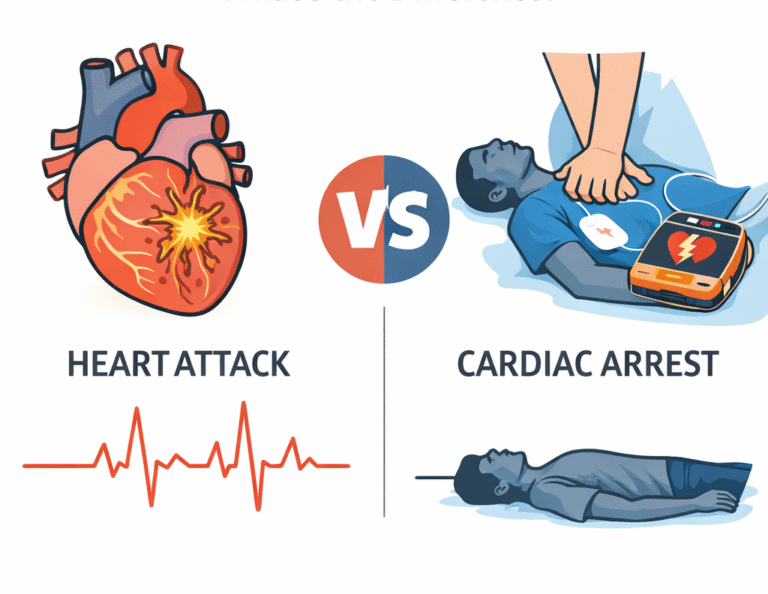
Many people use these two terms as if they mean the same thing. But they are quite different. A heart attack is a problem with blood flow. Cardiac arrest is a problem with the heart’s electrical system. During a heart attack, the heart keeps beating. During cardiac arrest, the heart stops. A heart attack can actually trigger a cardiac arrest in some cases. But not every cardiac arrest is caused by a heart attack.
Heart Attack: Caused by blocked arteries. Symptoms develop gradually. Person stays conscious. Needs medication and possible surgery.
Cardiac Arrest: Caused by electrical malfunction. Happens suddenly. Person loses consciousness. Needs CPR and a defibrillator immediately.
Why This Difference Matters
Understanding the difference can change the outcome of an emergency. If someone has a heart attack, call for help and keep them calm. Help them sit or lie down. If they are prescribed aspirin, they can chew one. But if someone has a cardiac arrest, time is even more critical. Start CPR right away. Use an AED (automated external defibrillator) if available. Every minute without CPR reduces the chance of survival by about 10%. Quick action can make all the difference.
Risk Factors You Should Know
Both heart attacks and cardiac arrests share some common risk factors. Diabetes is one of the biggest. People with diabetes are two to four times more likely to develop heart disease. High blood sugar damages blood vessels and nerves. This affects how the heart works. Other risk factors include high blood pressure, smoking, obesity, physical inactivity, and high cholesterol. A family history of heart disease also increases your risk. If you have diabetes and want proper heart care, consult the best diabetologist in Mumbai to get a complete health plan.
How Diabetes Affects Heart Health
Diabetes and heart disease are deeply connected. High blood sugar over time damages the walls of the arteries. This makes the arteries stiff and narrow. Plaques build up more easily in diabetics. This significantly raises the risk of a heart attack. Moreover, people with diabetes may not feel the classic chest pain during a heart attack. This is called a silent heart attack. It goes undetected and can cause serious damage. Regular monitoring of blood sugar, blood pressure, and cholesterol is critical for diabetics. Visit a specialist regularly to stay ahead of heart disease.
When to Seek Medical Help
Do not delay medical care if you notice any warning signs. Call emergency services immediately. Do not drive yourself to the hospital. Do not wait for symptoms to pass. Both heart attacks and cardiac arrests are life-threatening. The faster you act, the better the outcome. Early treatment during a heart attack can limit the damage to the heart. Quick CPR during cardiac arrest can keep blood flowing until help arrives. If your family has a history of heart disease or diabetes, schedule regular checkups. A proactive approach saves lives.
Prevention Is Better Than Cure
Most heart conditions are preventable with the right lifestyle. Eat a heart-healthy diet rich in vegetables, fruits, and whole grains. Avoid processed foods and excess salt. Exercise for at least 30 minutes most days of the week. Quit smoking if you smoke. Manage your stress levels. Get enough sleep every night. If you have diabetes, managing your blood sugar is non-negotiable. Work with your doctor to keep all your numbers in the healthy range. Prevention is always better than emergency treatment.
Conclusion
A heart attack and cardiac arrest are not the same. One affects blood flow; the other stops the heart. Both are serious. Both need immediate action. Knowing the difference can help you save a life. People with diabetes face an even higher risk of heart problems. Regular medical care is essential. Consult the best diabetologist in Mumbai to protect your heart health. Do not wait for an emergency to think about your heart. Act now, stay informed, and stay heart-healthy.